"Over the years my commitment towards making functional pieces has remained solid. I feel very strongly that the objects we use in our daily life are immensely important."
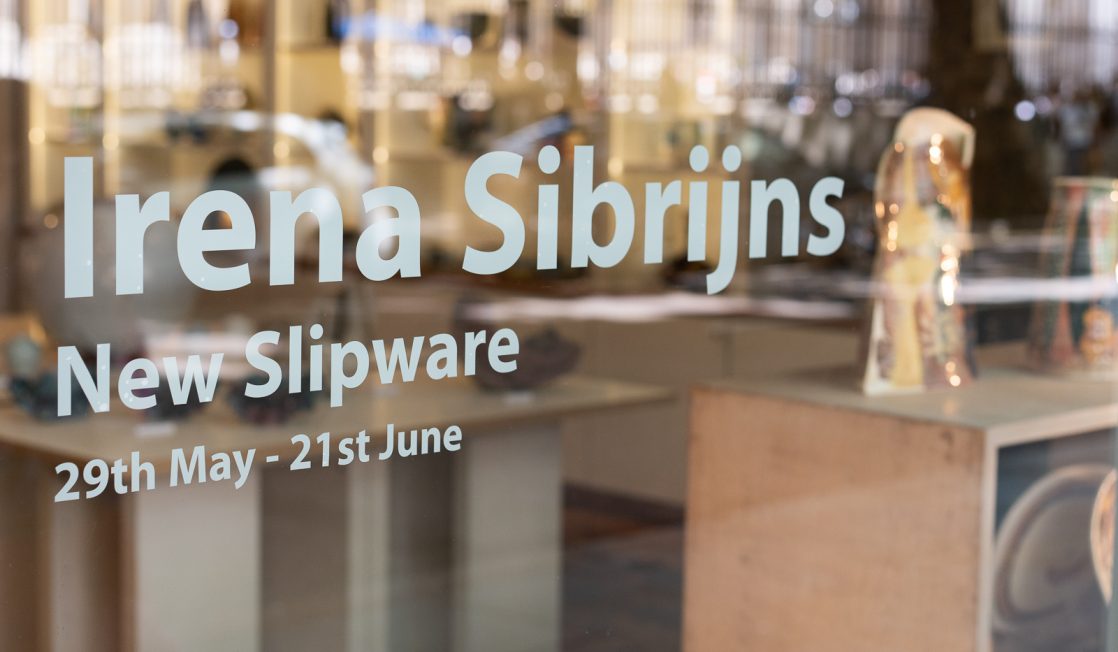
Contemporary Ceramics is excited to present Irena Sibrijns | New Slipware. As part of Irena’s exhibition, which runs from 29th May to Saturday 21st June 2025, we delve into Irena’s creative process to learn more about how she works.

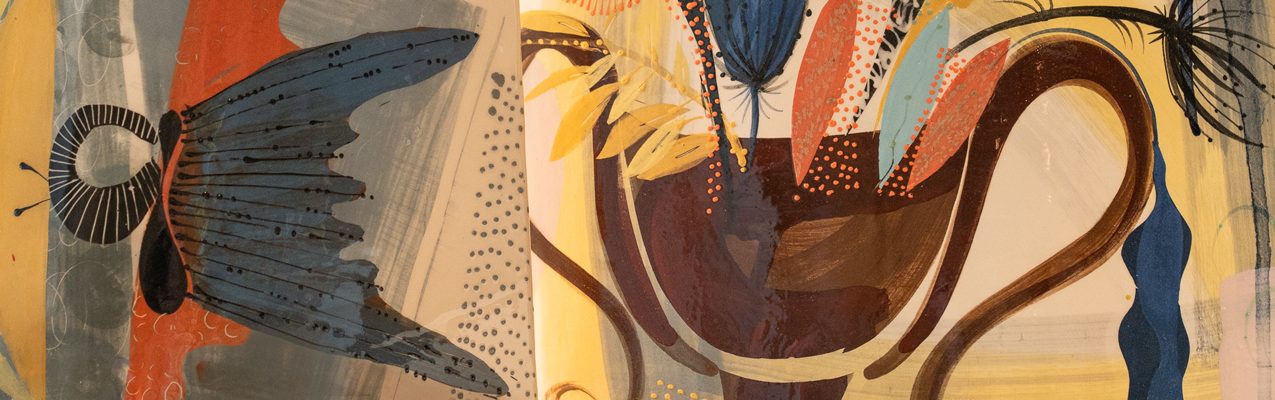
“My work is deeply embedded in Western European arts and crafts. Growing up in Amsterdam we used to go to the Rijksmuseum often with my parents and I think that Delft Blue pottery is embedded in my DNA. A lot of the bird and flower decoration I put on my plates and bowls are inspired by the years of looking at the patterns on 17th Century Dutch tiles and ceramics.
I have always been attracted to colour and always wanted to work in earthenware. The last years I have worked predominantly in white earthenware because I couldn’t bear the brownness of terracotta which stained every surface in my studio. I do miss the warmth of the terracotta though and recently have been trying to bring some of that warmth back in my palette.
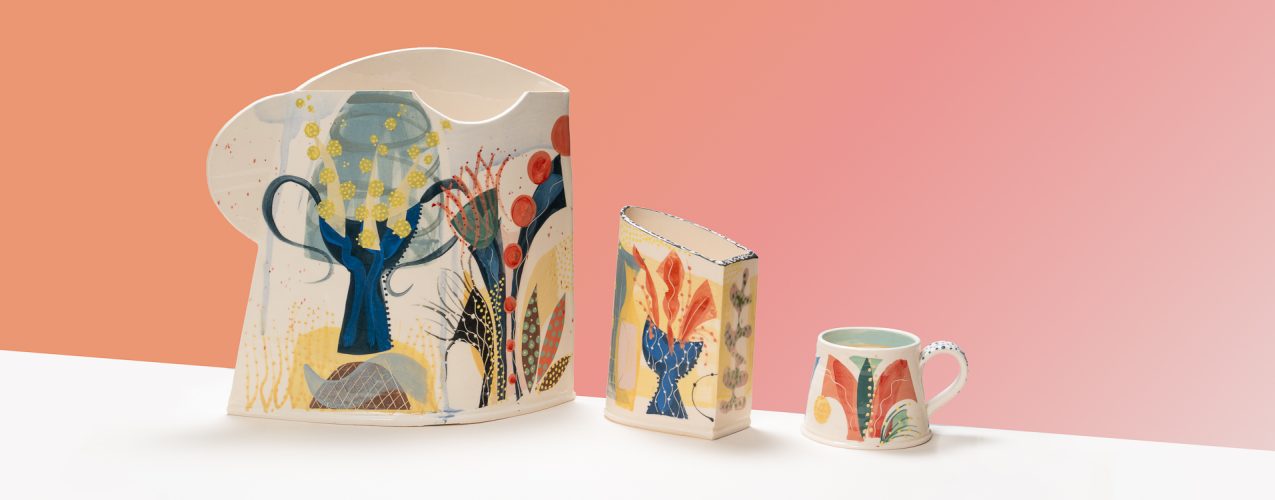
The newest pieces are partly a reaction on the sentiment above and again looking at the paintings in the Rijksmuseum in Amsterdam. The wonderful thing about slips is that you can layer the colours and mix them as you would in painting. At the moment I am especially interested in the 17th century Vanitas paintings by amongst others Maria van Oosterwijck. The symbolism in these paintings fascinate me and my larger vessels are a reaction to these Vanitas paintings. I have only started to touch the surface and it is I hope the beginning of a new body of work.
I have always worked from light to dark, now I am turning this around and start from putting ochres and even black pigments as the background working towards the lighter colours. I think this is resulting in a surprisingly luminous surface and I am very happy with the results of these later pieces.

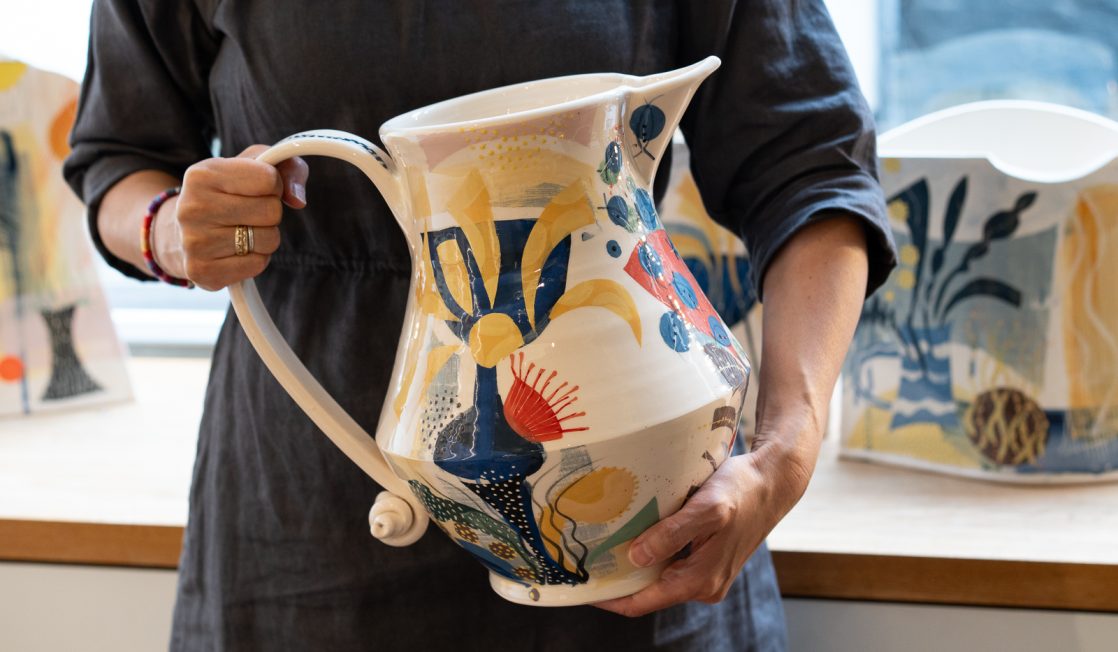
Over the years my commitment towards making functional pieces has remained solid. I feel very strongly that the objects we use in our daily life are immensely important. But I accept that not all the work I make is functional. Everything has equal importance, functional and non functional pieces. I don’t want to be firmly rooted in either camp.
One of the challenges in the way I decorate is that decoration has to follow shape and vice versa. I am a maximalist and sometimes find it hard to know when to stop with decorating a piece. With the more functional pieces this is easier as patterns work well in a rhythmic way on the shapes. However with the vessels and the plates you have a different challenge. It is not a matter of putting an image on the pieces to cover the surfaces. It often takes me a long time to decide on a composition which works well with the shapes. Although some of the shapes of the vessels are getting more involved, I tend to keep the shapes fairly simple in order to work with my surface decoration.
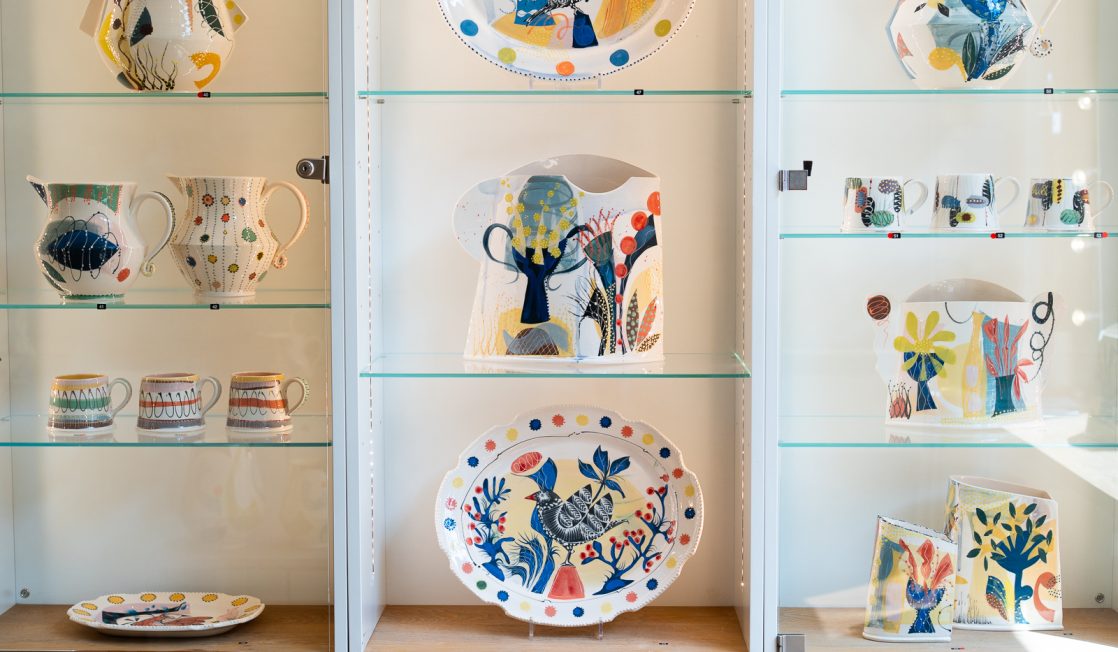
I think I was always drawn towards making things, whether it was fabrics or paint or clay. Much of what I make now contains elements of all of these. I have also grown plants, and perhaps this is reflected in the way my decoration has developed.