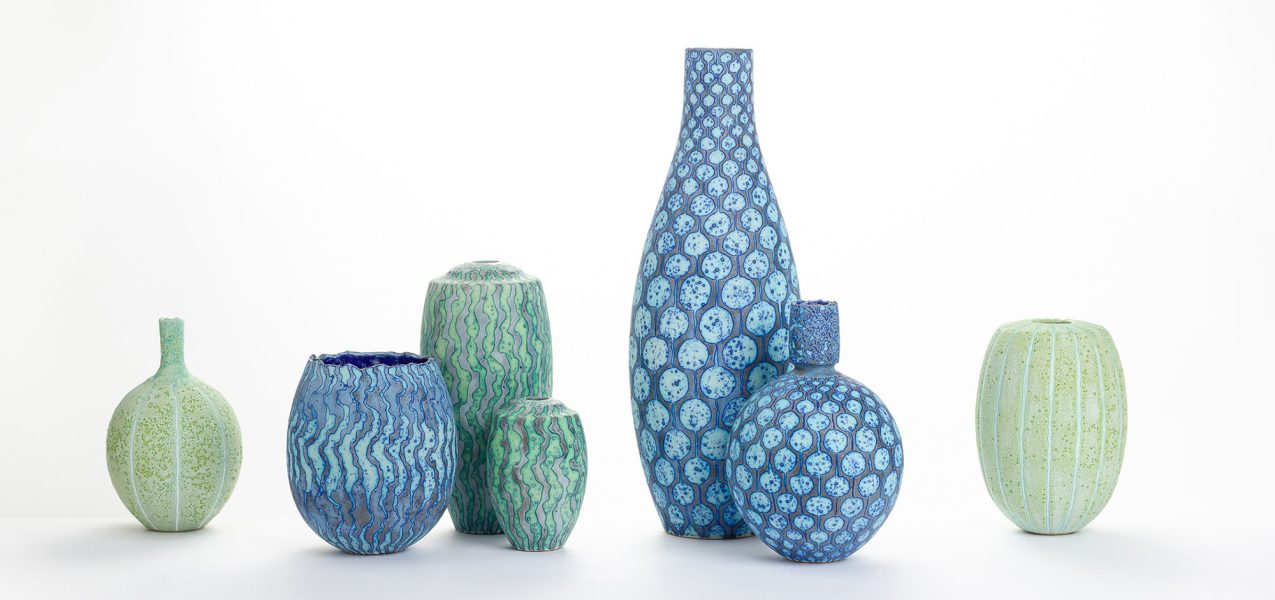
Contemporary Ceramics gallery and shop exhibits the greatest collectable names in British ceramics along with the most up and coming artists of today. Our distinguished makers are all carefully selected members of the Craft Potters Association.
All of our makers are members of the Craft Potters Association and each of them have a story to tell.
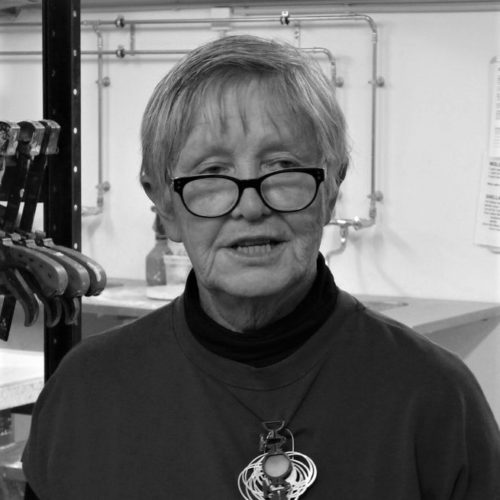
Priscilla was born in Cape Town, South Africa and attended the School of Art in Durban before setting up her own ceramic studio in England in 1968. She spent a decade in England before moving to Denmark where she has lived and worked since.
Priscilla makes porcelain pinch pots with graphic surface etchings revealed in underglaze. Her monochrome pots are often wood-fired.
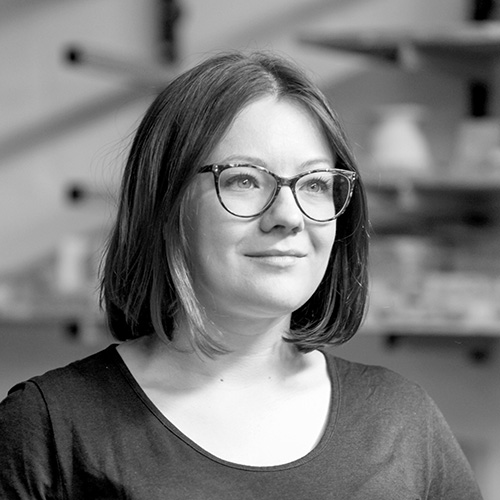
Making in her hometown of Stoke-on-Trent, Laura draws from the creative heritage and ambition of the pioneering potters who made the city famous. Her contemporary forms echo the grandeur of 18th century ceramics, she has long admired. Thrown in porcelain, each piece is a unique ‘sketch’ in clay, carefully turned and refined to reveal the precise form.
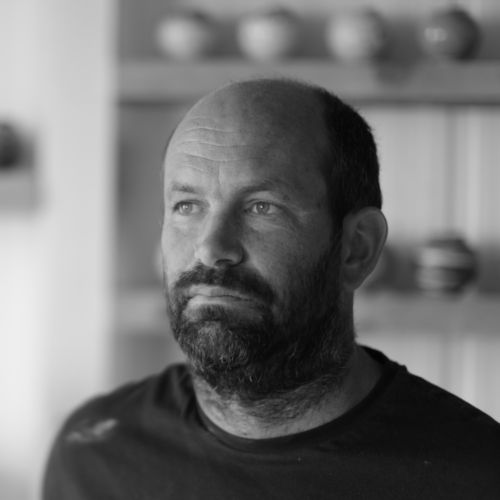
Adam uses a single pure jar form as a canvas to map his observations from an ongoing study of his surroundings. He incorporates stone and locally dug clay into his work to create a narrative, one that conveys a unique sense of place.
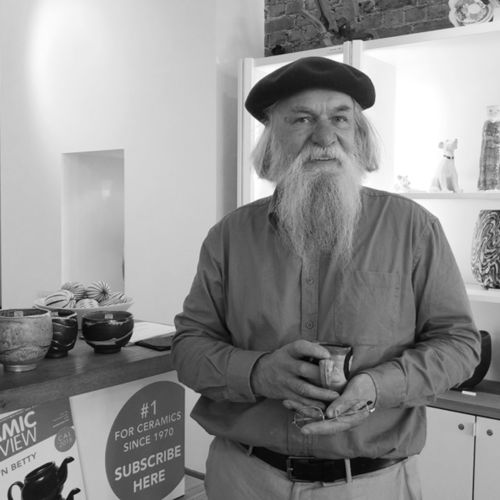
John left art school in 1970 and dug trenches for gas pipes for a living. Later, through his college friend’s brother (who was a potter) John worked for David Frith in North Wales. He found the discipline hard, but it has stood him in good stead ever since.
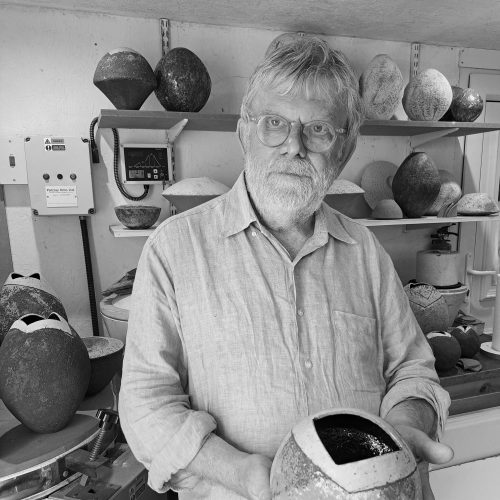
David was born in South London and trained in Graphics and 3D design. After working in art education for many years, specialising in ceramics, he took early retirement to concentrate on his own work and established his own workshop in the Forest of Dean where he now produces a range of hand-built ceramics.
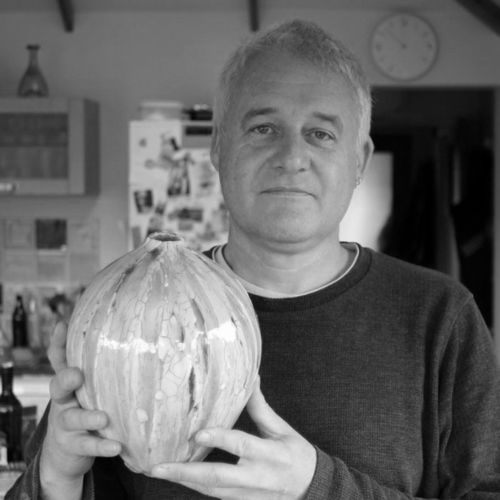
Matthew’s work explores the links between ceramics and geology and place, making pieces entirely from geological samples that he has collected from specific locations around the country, and that illustrate the ceramic qualities inherent in these materials.