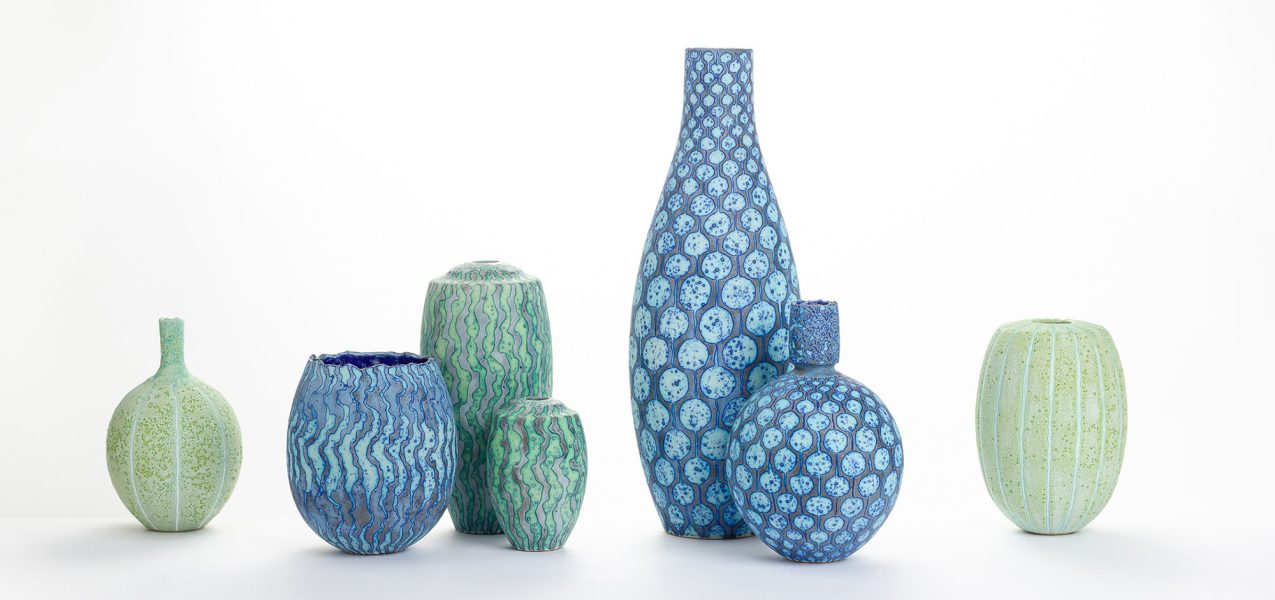
Contemporary Ceramics gallery and shop exhibits the greatest collectable names in British ceramics along with the most up and coming artists of today. Our distinguished makers are all carefully selected members of the Craft Potters Association.
All of our makers are members of the Craft Potters Association and each of them have a story to tell.
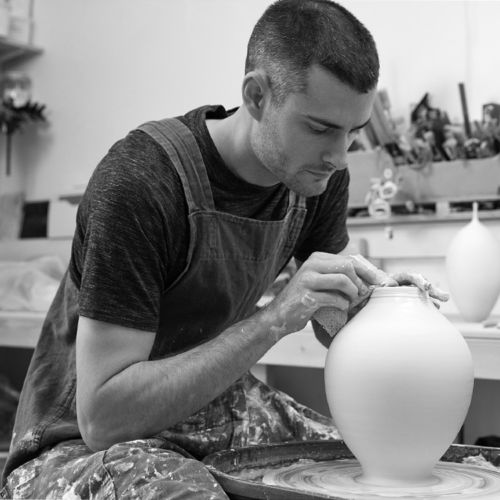
Matt Horne began his career in ceramics with training at Aylesford Pottery in Kent, where he developed his technical skills in production throwing, before going on to set up his own workshop near Folkestone in 2008.
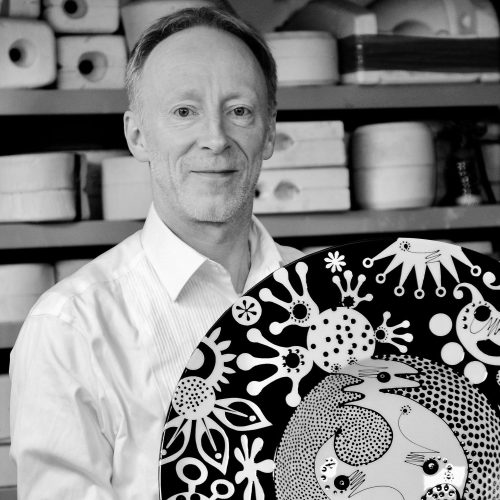
Mark makes black and white domestic slipware using a combination of traditional craft and modern industrial ceramic techniques, in a contemporary take on Staffordshire slipware. Currently, he is developing his tableware and large functional work into sculptural one-off pieces.
These include slab built, stacked designs for sculptures which depend on gravity to interlock. He is also experimenting with platinum lustre transfers to exploit the differing reflective qualities of glazed and lustred surfaces.
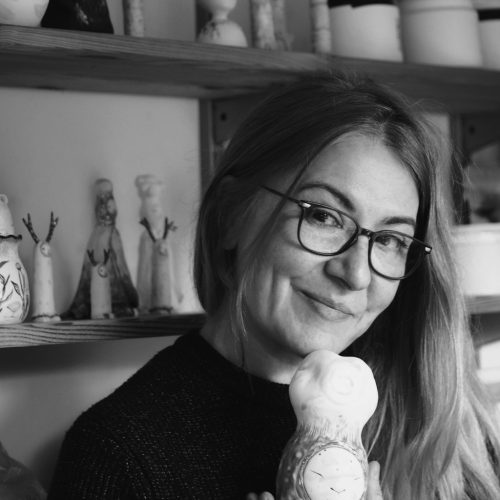
Marina was born in Toulon in the South of France and spent part of her childhood in the rich coastal plains of Gabon, before moving to Alsace near the Vosges mountains and then to England. Her immersion in different landscapes and cultures fostered a sense of curiosity towards the transience of existence, which continues to inform her creative practice. She studied sculpture at Falmouth School of Art and later did a two-year
City and Guilds in ceramics in Nottingham.
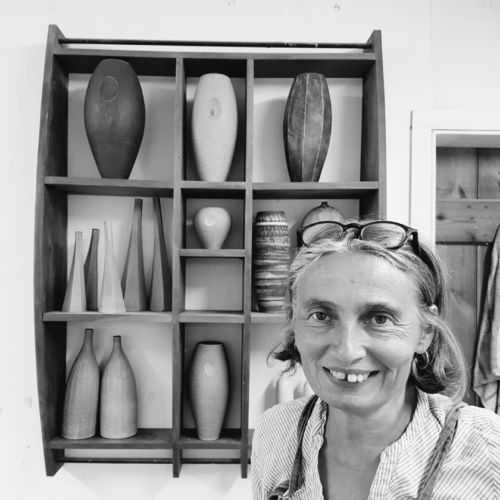
Emily mostly works with a red stoneware clay that fires to a rich dark brown, with iron speckles showing through the glaze. She occasionally works with porcelain as the white body is ground for wonderful bright glazes. Most of the glazes contain barium and copper, a combination which give rise to interesting matt green glazes in an electric kiln.
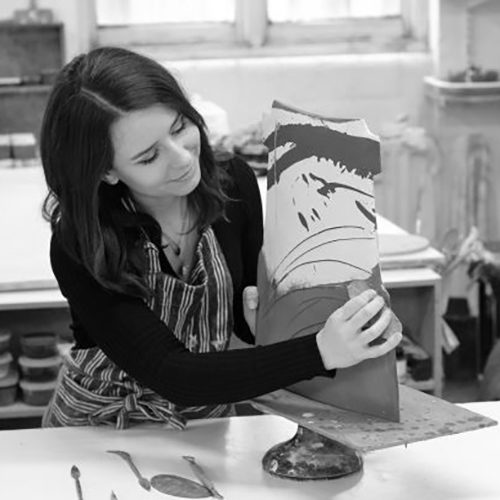
Kirsty graduated from the Fine Art: Painting and Printmaking course at Glasgow School of Art in 2009. She subsequently attended life sculpture classes which led her to working with clay.
Inspired by day-to-day experiences, local landscape and wildlife, Kirsty’s ceramics are an exploration of gesture, form, colour, and place.
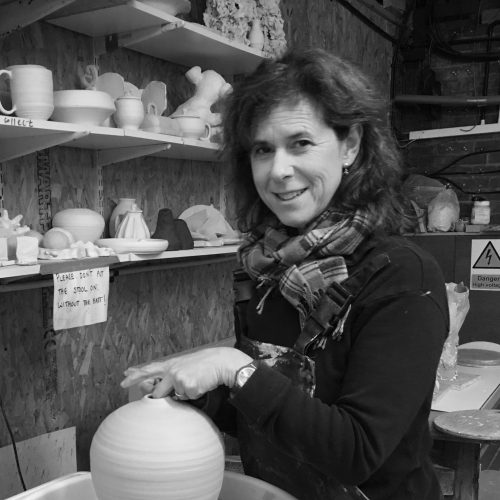
Gaby’s current focus is making saggar-fired, wheel-thrown pots. What originally drew her to this type of making was the interplay between the highly controlled form, and smooth, polished, surface texture of the piece on the one hand; and the ‘seemingly’ random nature of the surface marks created by smoke and metallic, chemical reactions, on the other.