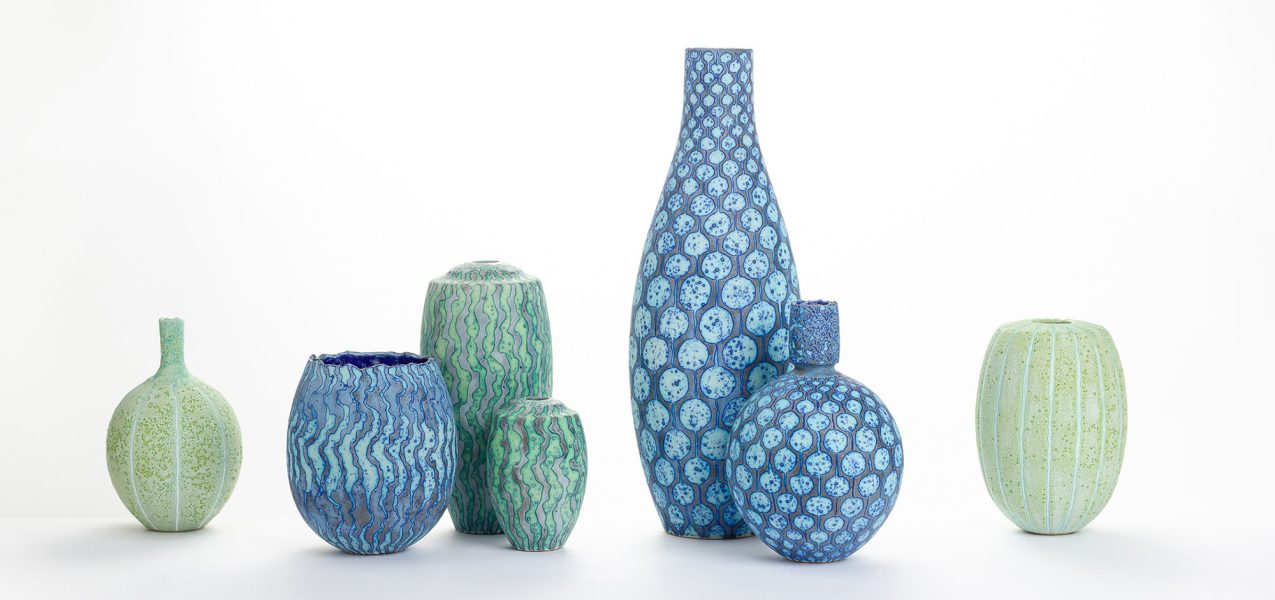
Contemporary Ceramics gallery and shop exhibits the greatest collectable names in British ceramics along with the most up and coming artists of today. Our distinguished makers are all carefully selected members of the Craft Potters Association.
All of our makers are members of the Craft Potters Association and each of them have a story to tell.
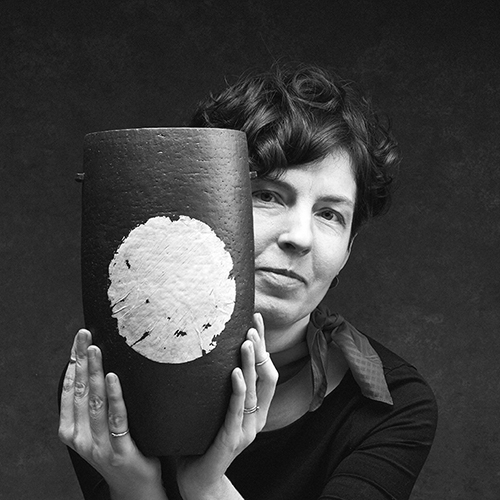
Growing up in communist Poland, Ania’s everyday life was underpinned and surrounded by stark, grey concrete structures – brutal, imposing, and unavoidable. This architecture was raw, substantial and woven into the history and fabric of the country and her upbringing.
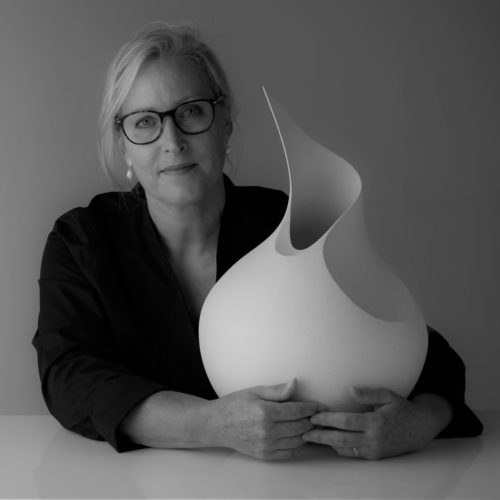
Originally from Kent, Mitch studied Ceramic Design at Falmouth School of Art during the early 1990s. She creates hand-built sculptural ceramics inspired by the natural forms from her coastal finds, both at home in North Devon and on her travels. Her stoneware vessels hark back to the dry, worn spirals of old conch shells collected on Caribbean beaches.
Sabine completed an apprenticeship as a thrower in 1998 with Hans Joachim Grünert in Waldenburg (Sachsen) in East Germany, followed by a three-year training as a production thrower where she was introduced to wood firing. She became enthralled by the high demands of wood-firing. In 2000, she came to England to gain more experience and met fellow potter, Nic Collins who became her partner. In 2001, she moved to Devon.
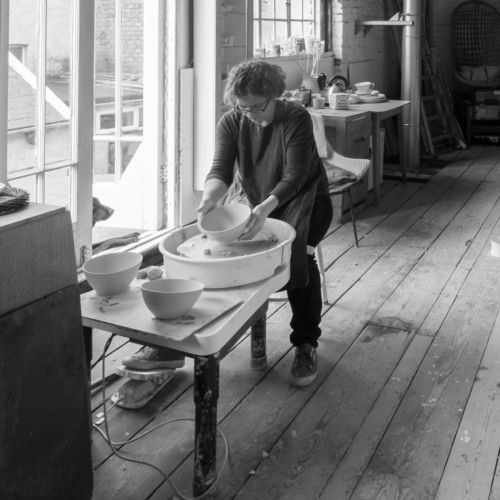
Sue’s multidisciplinary conceptual practice comprises stand-alone pieces, installation, film and tableware, collectively defined by a distinct language. Current work is rooted in traditional techniques, thrown forms made on the wheel, firing in real flame kilns and using natural wood ash deposits and the reduction flame to add unpredictable embellishment.
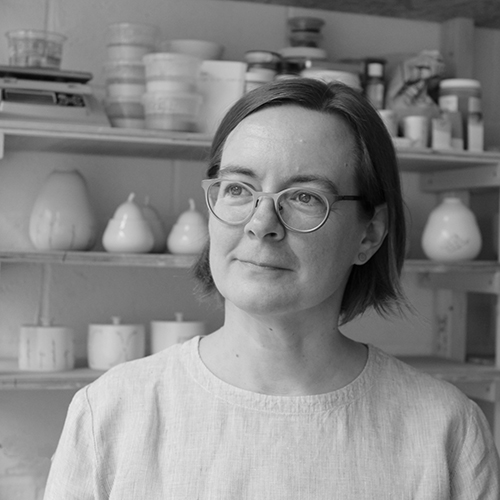
Birgit Pohl grew up in Germany and porcelain objects in her family home always held a particular fascination. After moving to London, a chance visit to a potter’s studio first opened her eyes to the possibilities of working with porcelain. She learned how to throw on the wheel initially at evening classes and went on to study at Clay College, Stoke-on-Trent.
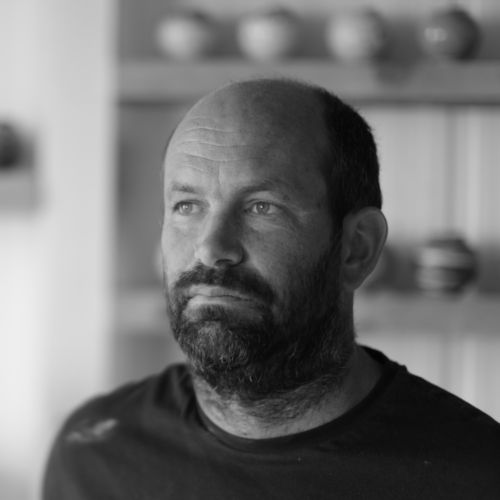
Adam uses a single pure jar form as a canvas to map his observations from an ongoing study of his surroundings. He incorporates stone and locally dug clay into his work to create a narrative, one that conveys a unique sense of place.