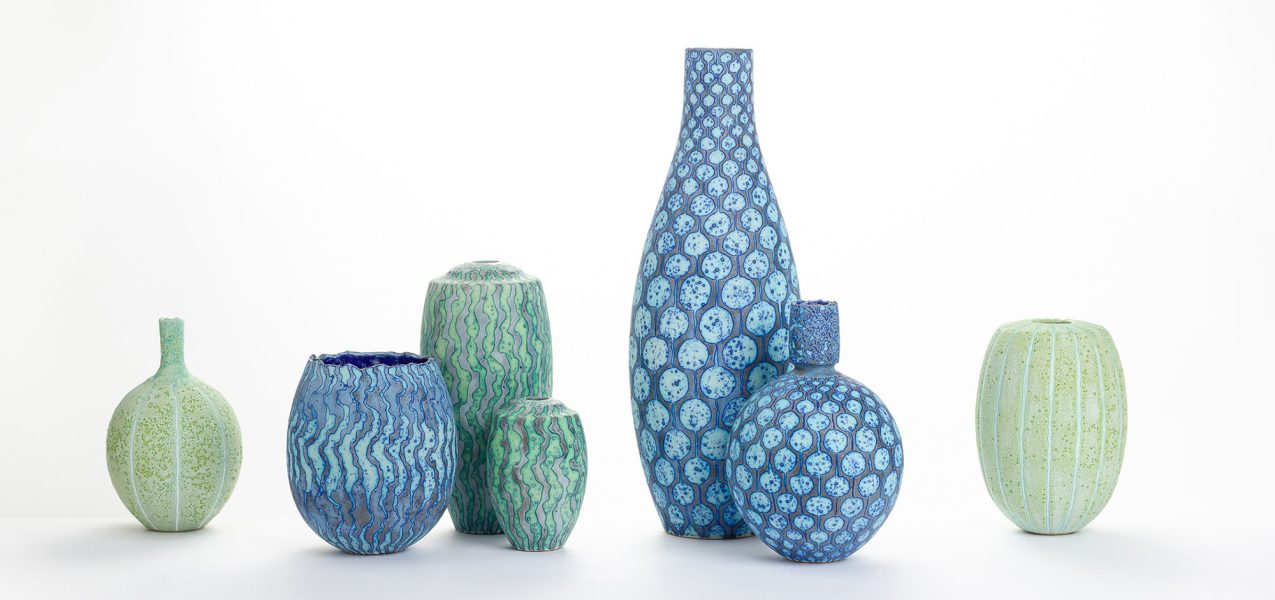
Contemporary Ceramics gallery and shop exhibits the greatest collectable names in British ceramics along with the most up and coming artists of today. Our distinguished makers are all carefully selected members of the Craft Potters Association.
All of our makers are members of the Craft Potters Association and each of them have a story to tell.
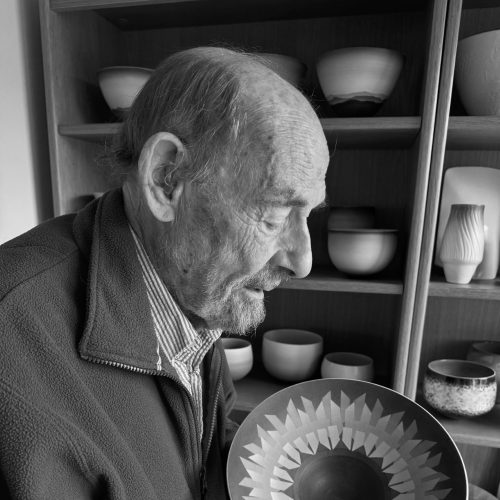
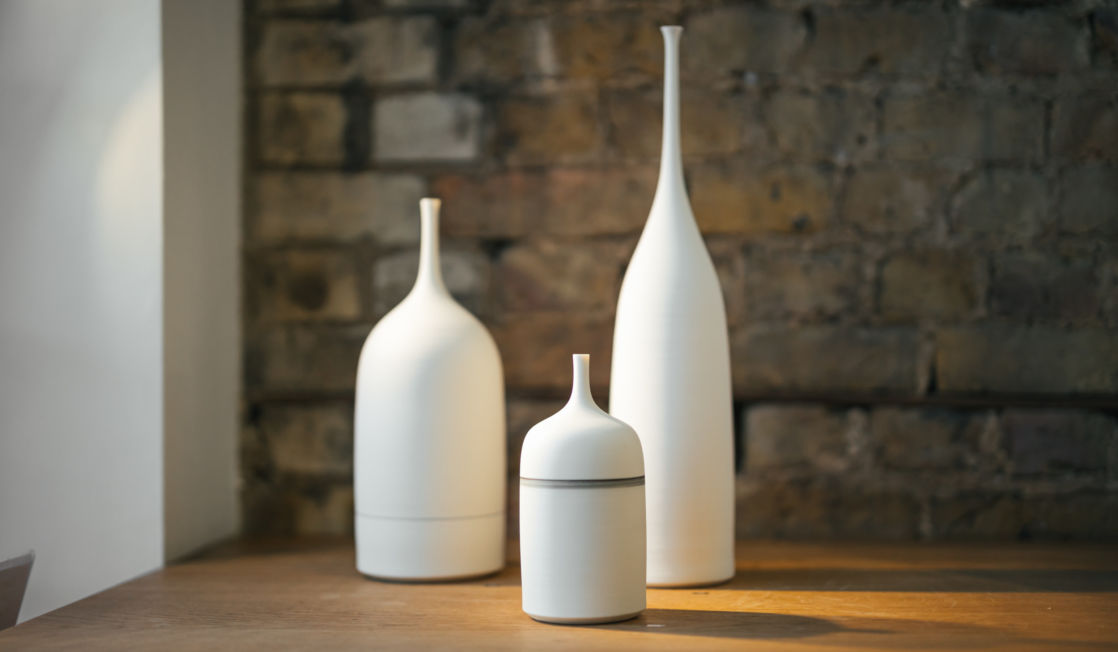
Porcelain, with its fine texture, purity and whiteness, allows Peter to explore relationships between form and surface in a way that is more rewarding than with any other clay. Wheel-thrown vessel forms offer infinite opportunities for subtle variations, but his particular concern, while attempting to achieve harmony and balance in the work, is to express his feelings for the natural world through the positive radiation of light and colour.
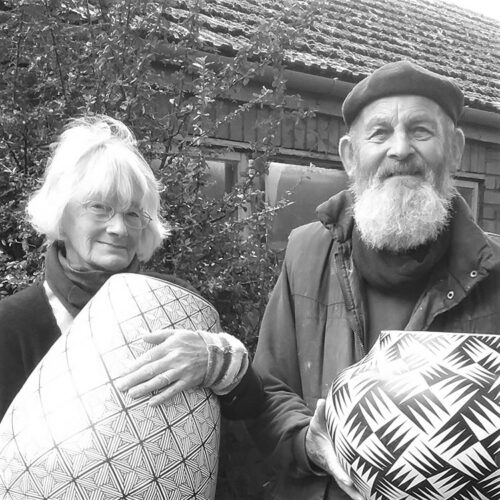
Ant first encountered pottery in primary school. His teacher, Mr Wright introduced him to clay and planted the beginnings of a lifelong passion. He started out as a science teacher but gave up teaching in his late twenties after years of evening classes and moved to Lincolnshire to set up his own pottery workshop.
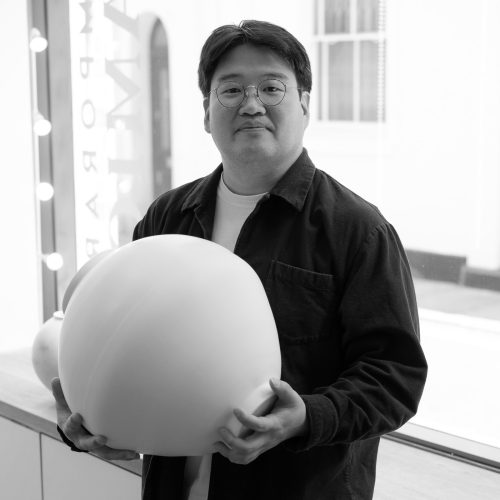
Jaejun Lee is a Korean ceramicist based in the UK. After completing both his BFA and MFA at Seoul National University, he moved to the UK from South Korea in 2018 on a Tier 1 ‘Exceptional Talent’ visa from the Arts Council England. He specialises in porcelain and makes both artistic and functional ware. He aims to communicate a message of functionality and beauty through his work. Jaejun wishes for the objects to enrich and enhance people’s everyday lives.
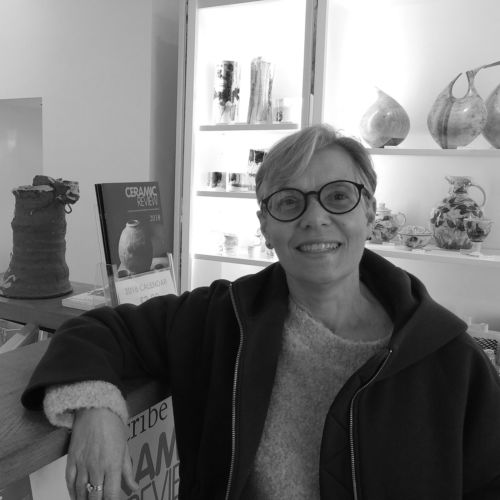
As a rebellious schoolgirl, Tina always knew that she would go to art college as she absented herself from her maths lessons to go to exhibitions. In 1974, she commenced her BA in Ceramics at Bristol Polytechnic with a strong 2D portfolio but hardly any experience of working with clay and she found it challenging. Nevertheless, she was drawn to it because it was the only material which was so malleable, human, primal, intimate, flexible, fundamental, and could be adapted to suit all personalities.
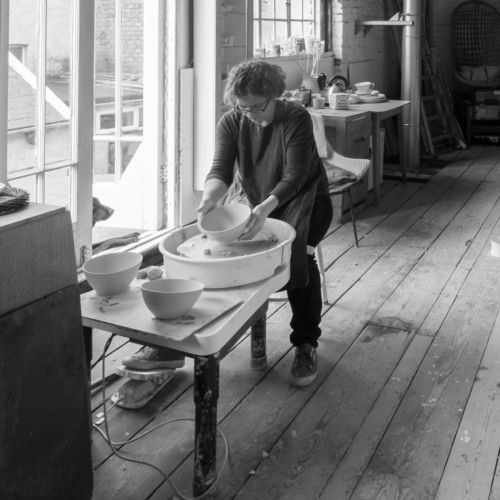
Sue’s multidisciplinary conceptual practice comprises stand-alone pieces, installation, film and tableware, collectively defined by a distinct language. Current work is rooted in traditional techniques, thrown forms made on the wheel, firing in real flame kilns and using natural wood ash deposits and the reduction flame to add unpredictable embellishment.

Angela has been working in bone china since 1991 using traditional slip casting techniques: designing her own models, making plaster moulds, and finally slipcasting translucent pieces. Conventional forms, vessels, bowls and plates retain both their functional identity but also serve as a natural canvas for decoration. Her work develops in series mostly inspired by nature; depending on the decoration each series has its own identity.