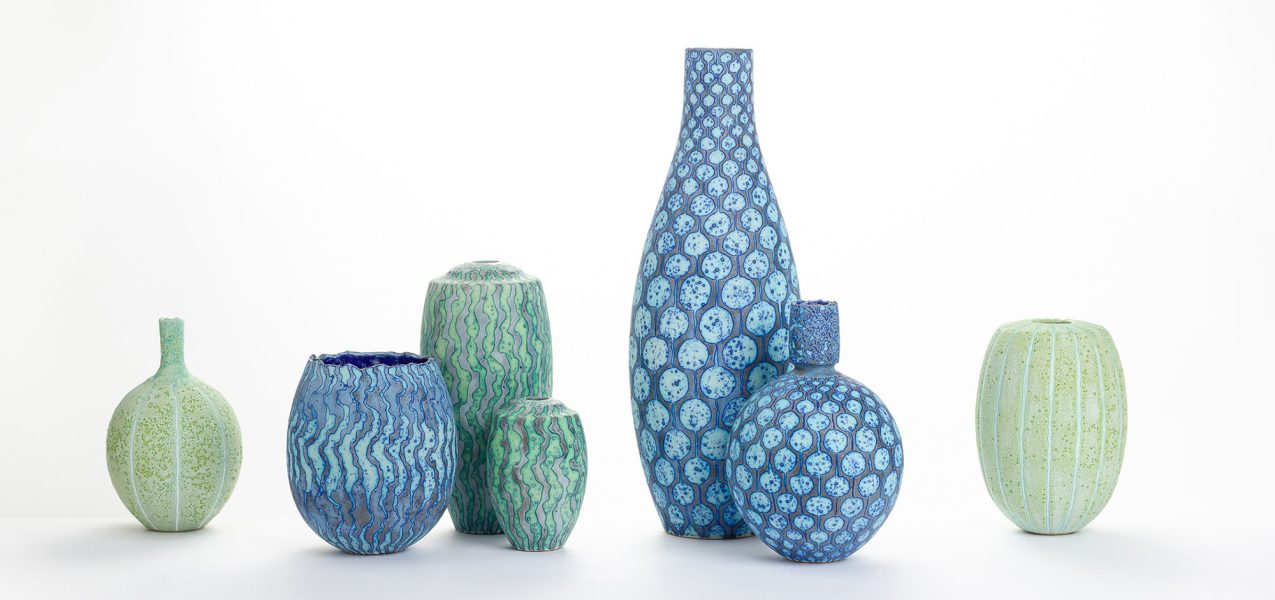
Contemporary Ceramics gallery and shop exhibits the greatest collectable names in British ceramics along with the most up and coming artists of today. Our distinguished makers are all carefully selected members of the Craft Potters Association.
All of our makers are members of the Craft Potters Association and each of them have a story to tell.
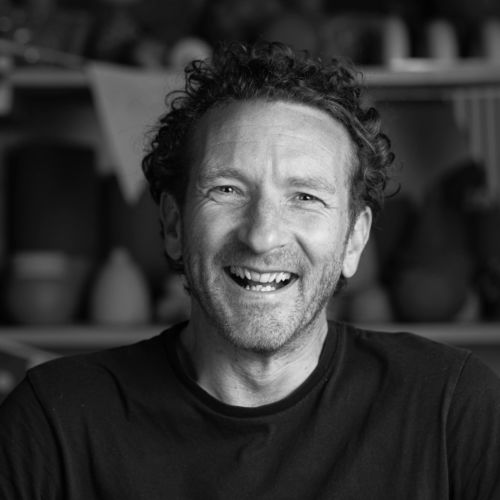
As a child, Jon loved drawing and messing about with mud. He and his brother and friends spent many joyful years roaming and exploring on the waste ground of empty housing plots. The exposed seams of soft yellow clay they discovered was perfect for making ‘weapons’ - squashed balls of clay on the ends of sticks. Although childhood has long passed, the activity has informed and inspired his approach to ceramic practice and his educational/community engagement work.
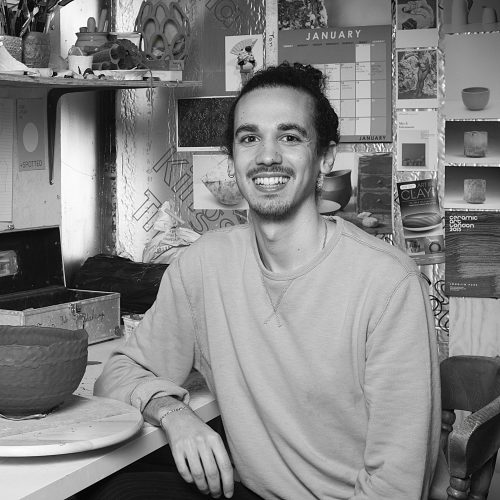
Toni’s work and ethos is centred around the idea of ceramics and its strong association with craft – as a material and its context within the fine art spectrum. He is interested in the history and connotations of porcelain and terracotta. The materials as symbols of trade, status, function, hierarchy; all are factors which correlate with the constant debate regarding crafts and its position within today’s society.
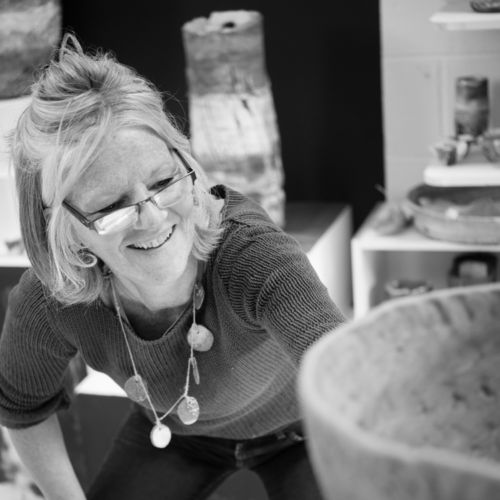
Rachel Wood’s ceramics are noted for their expressive, visceral, yet calm and considered qualities. Animated and complex surfaces, swathed with layer upon layer of slip and glaze, are carefully nurtured to life and so compel the viewer to their mysterious and hidden depths.
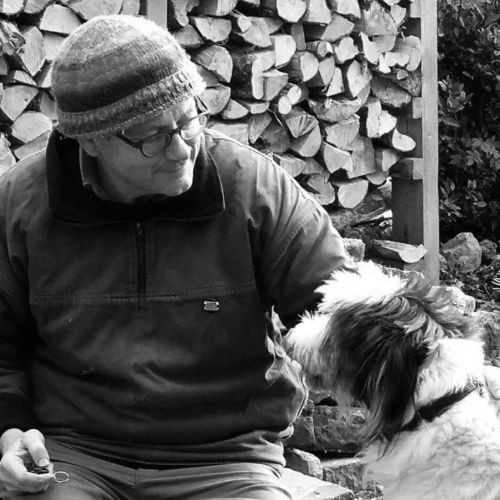
Chris was born in 1959. His introduction to clay began at adult education classes in Islington. He went on to study Sculpture at St. Martins School of Art, London and graduated in 1982. Chris has moved around the country over the last decades. He helped set up the Chocolate Factory studios in Hackney, London in 1995. In 2006, he moved to Argyll, Scotland to set up another pottery. By 2009, Chris relocated to Cumbria setting up a new pottery in a converted farm building.
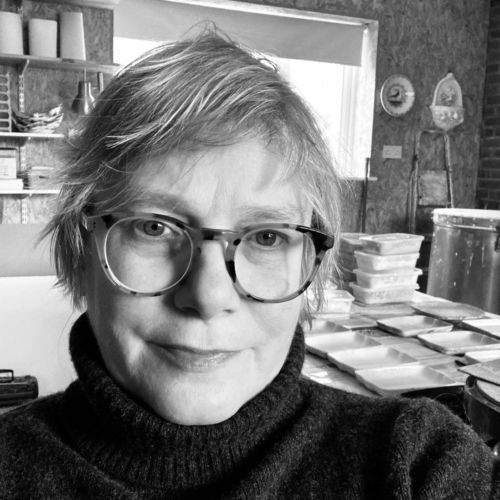

Claudia trained as a painter but transferred to pots because she found the turning surface sympathetic to an unfolding visual narrative. Stories are her raw material - both her own and other people's, also fictional stories, songs, and poetry. The human, cultural, and historic associations of pottery connect particularly well to the work she does interpreting women’s histories and contemporary lives. The nature of pots is that they can break, and so can be mended. This she finds to be a compelling metaphor for both trauma and survival - the mending has an optimistic quality.