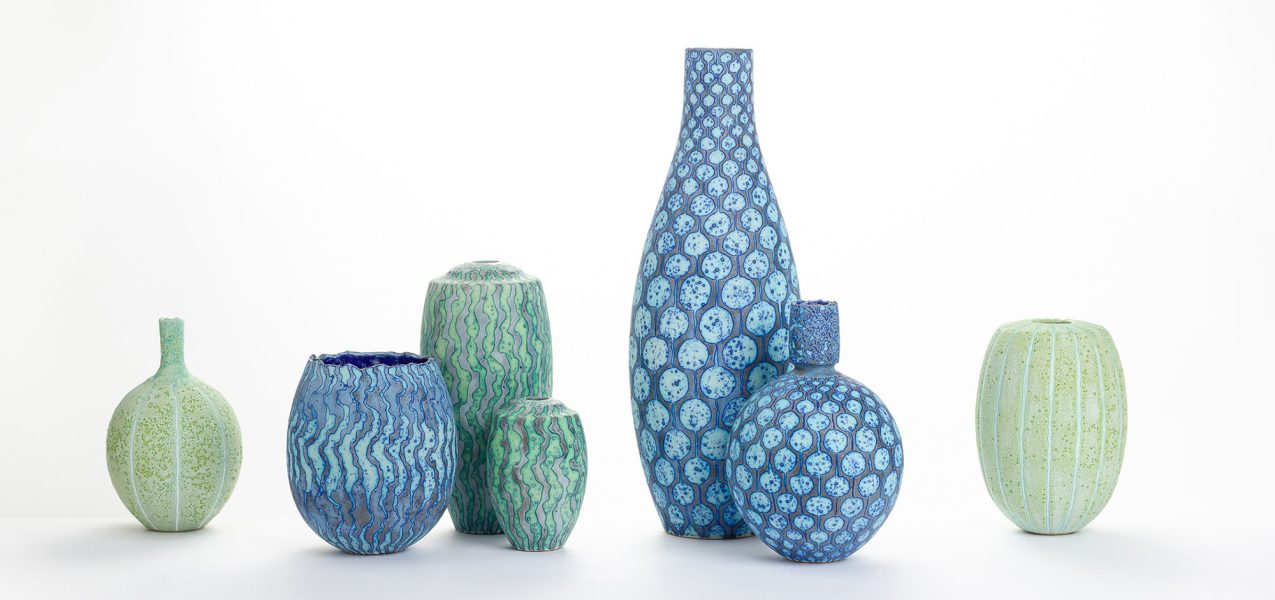
Contemporary Ceramics gallery and shop exhibits the greatest collectable names in British ceramics along with the most up and coming artists of today. Our distinguished makers are all carefully selected members of the Craft Potters Association.
All of our makers are members of the Craft Potters Association and each of them have a story to tell.

Emma’s ceramics practice is built on notions of what is known as Emotionally Durable design. She uses the making language of ceramics and a design sensibility to make work which is contemporary and relevant over time.
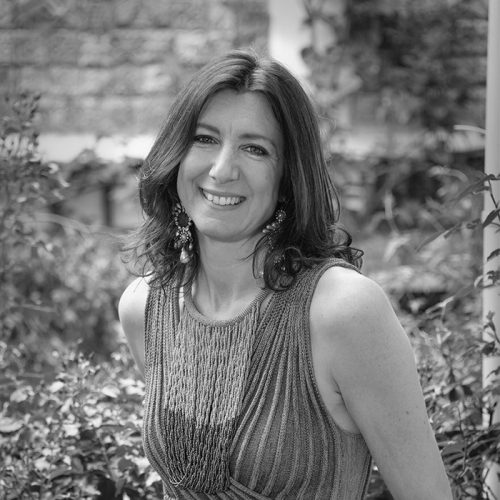
Kay Aplin graduated in 1995 from Chelsea College of Art, specialising in ceramics and glass. Since then, Kay has had a successful career as an architectural ceramist, producing a distinct range of site-specific commissions for the public realm around the UK and internationally.
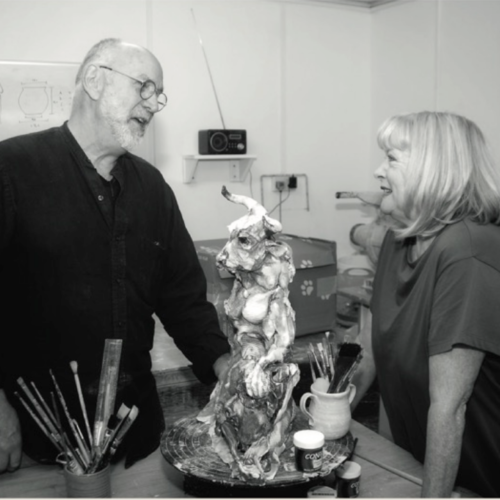
Gaynor Ostinelli and Paul Priest, or Ostinelli & Priest, are well known for their animal sculptures which draw on both domestic and wildlife. Exhibited around the world, their work is represented in numerous galleries, public and private collections in the UK and overseas. The animals they sculpt varies as their subjects, and the demand for the work, expands.

David had no artistic or ceramic history in his family, nor did he formally study ceramics. He discovered ceramics by accident as an element in his teaching degree whilst at Bretton Hall in the late 1960s. Similarly, his work in raku was appropriately the result of a serendipitous encounter with an American raku potter in the mid-1970s. David states that due to persistence, natural talent and support from colleagues, friends, and family, especially his wife Jan, over the past 40 years he has established himself as a leading international practitioner in raku ceramics.
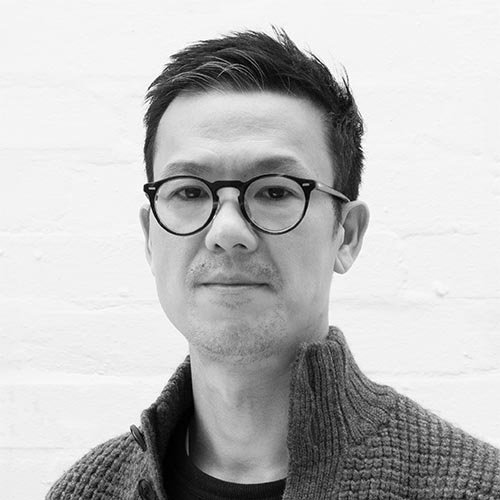
Daniel obtained a BA (Ceramics) from Royal Melbourne Information Technology University (co-presented with Hong Kong Art School) in 2007.
Daniel creates carefully sculpted porcelain vessels. The start of Daniel’s creative process begins with throwing. He is fascinated by the patterns and ongoing variations that emerge during this stage. The unique traces left on the forms evoke for him a sense of a path paved with the sedimentation of memory.