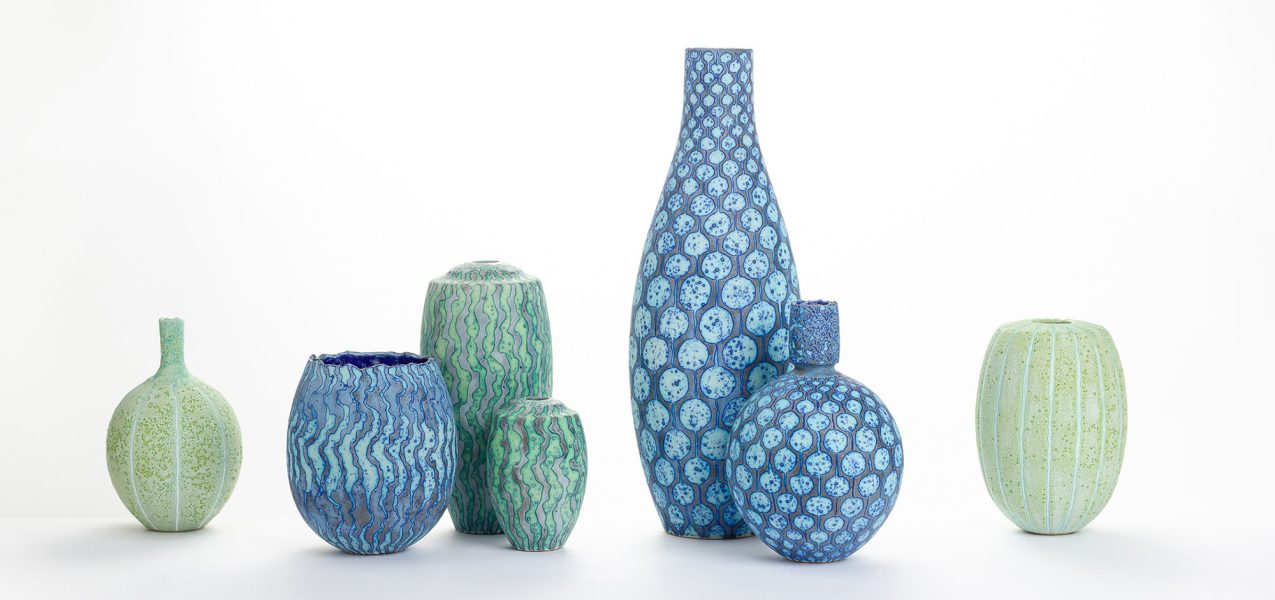
Contemporary Ceramics gallery and shop exhibits the greatest collectable names in British ceramics along with the most up and coming artists of today. Our distinguished makers are all carefully selected members of the Craft Potters Association.
All of our makers are members of the Craft Potters Association and each of them have a story to tell.
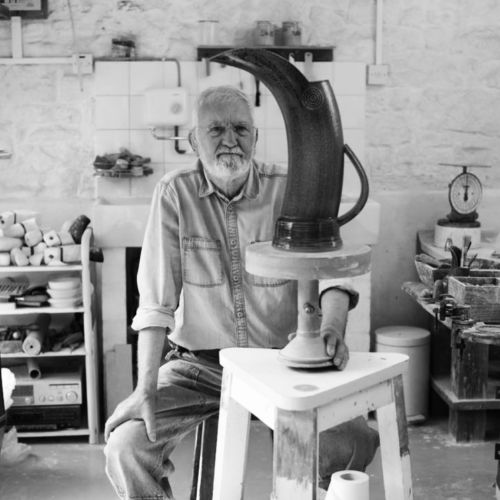
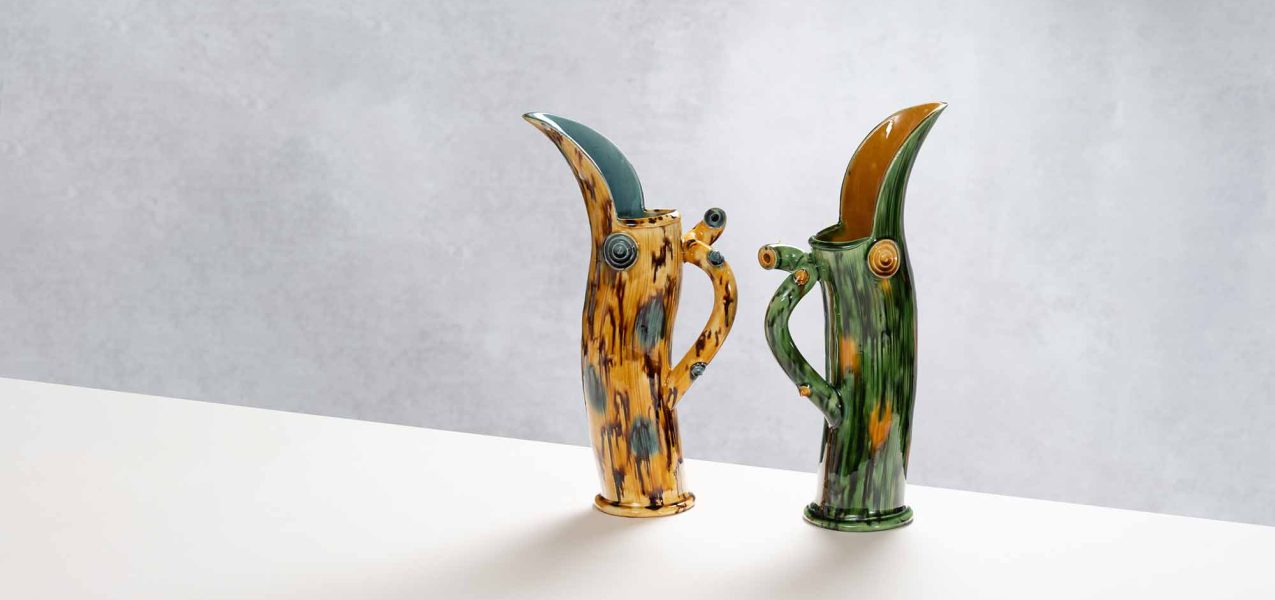
Walter Keeler is a British studio potter specialising in salt glaze pottery. Named 'Welsh Artist of the Year' in 2007, Walter's work is held in public collections including Victoria & Albert Museum, American Craft Museum, New York, and the Museum of Modern Art, Tokyo.
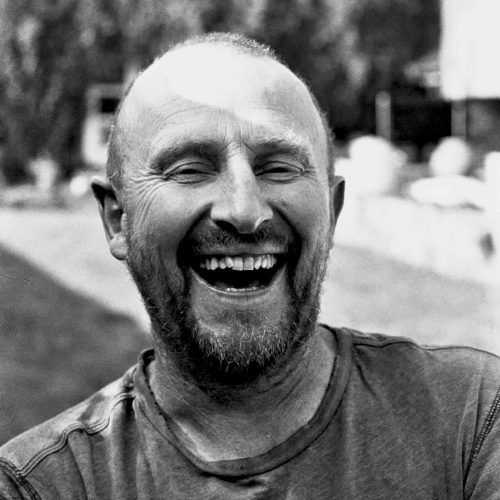
Jeremy trained in Falmouth, Cornwall and then in Cardiff before being invited to join Wobage Workshop in rural Herefordshire in 1995. From here, he makes wheel-thrown, wood-fired salt-glazed stoneware and porcelain. He and his wife Petra, also a potter and printmaker, live on the edge of the Forest of Dean. They were invited to join the Wobage studios as part-time apprentices to Mick and Sheila Casson, a role they maintained until Mick’s death in 2003.
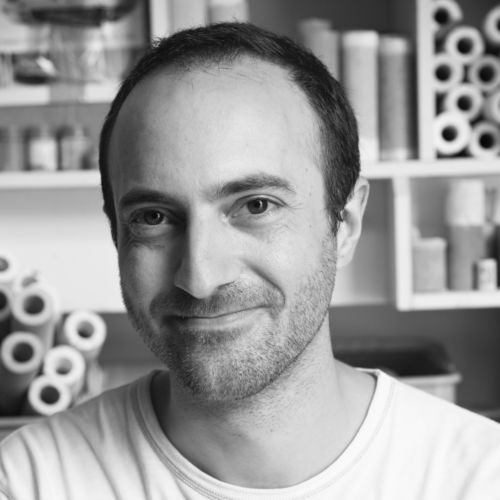
Since graduating from the celebrated Harrow Ceramics course in 1994, Daniel Smith has worked from the same London studio he helped establish. This continuity is reflected in his work with a commitment to exploring a family of useful forms - plates, bowls, cups, jugs, vases.
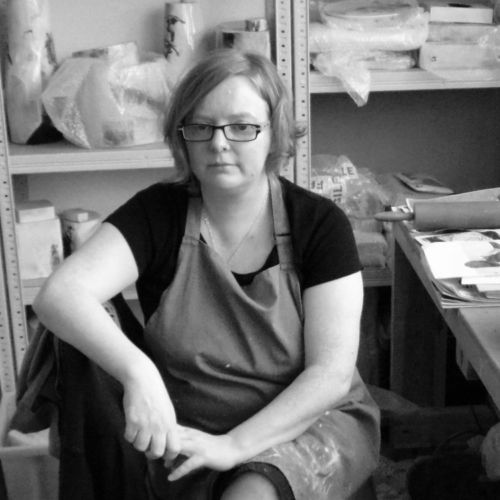
Fiona’s focus is mainly on hand built ceramic vessels, with multiple layered surfaces. They combine traditional and contemporary processes. Pieces are first usually coiled or slab built, then painted and printed with coloured slips.
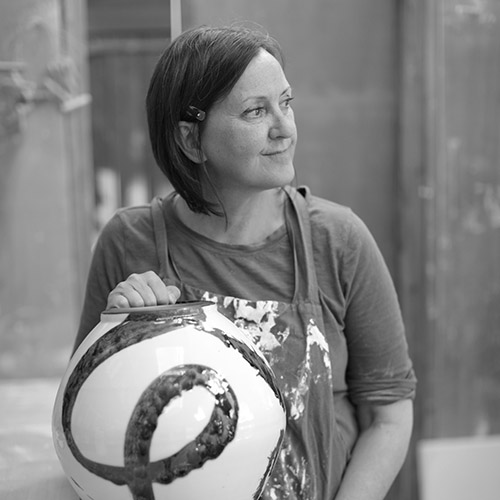
Tricia graduated from Gray’s School of Art, Aberdeen in 1985 and after a post graduate year, she worked for a production pottery in the Highlands for three years. While there, she became a principal hand-decorator of pots and developed some surface designs for the range, but also received a grounding knowledge of the ceramics industry and practices.
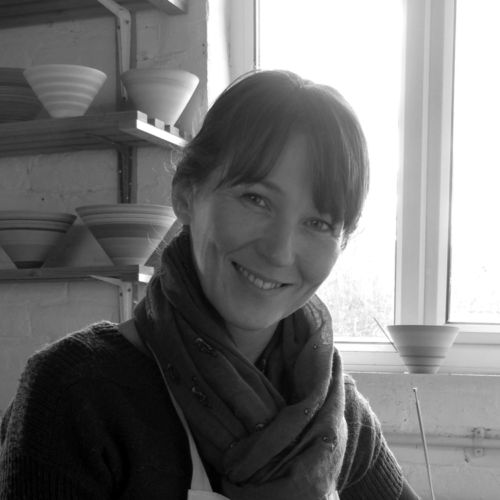
All bowls Sara Moorhouse makes are thrown on a wheel using white stoneware clay or porcelain. The banded bowls are then turned and bisque fired before being returned to the wheel and hand painted with underglaze colour. The Colourblock series are turned and then the lines drawn on using a laser level, which are then taped and hand painted. The white porcelain bowls are handed carved either on or off the wheel, depending on the arrangement.